Skip to content


Many people have heard the recommendation to visit the dentist every six months, but that schedule is not always the same for everyone. Preventive dental care is designed to catch small concerns early and protect long-term oral health, and the right timing can vary from person to person. Factors such as cavity risk, gum health, dry mouth, and overall medical conditions can influence how often dental visits are recommended. The goal is not only to treat problems when they appear, but to prevent them before they develop. So how often should you really see the dentist, and what could happen if routine visits are delayed? Let’s take a closer look at the preventive care schedule that supports a healthy smile.
Why Regular Dental Visits Matter for Your Oral Health
Even if we brush and floss consistently, we still need regular dental visits to keep oral health on track through preventive dentistry. These appointments let us detect cavities, gum disease, and other concerns early, when intervention is simpler and more predictable. Professional cleaning supports dental hygiene by removing plaque and hardened tartar that home care can’t reach, improving gum health, and reducing inflammation. We also evaluate risk factors and adjust your home routine for better cavity prevention. By addressing problems before they progress, we often avoid complex procedures, lower treatment costs, and maintain comfort and function.
So, How Often Should You Really Visit the Dentist?
How often should we really schedule a dental visit? For most of us, the baseline dental visit frequency is twice per year. That cadence supports early detection and steady prevention strategies without over-treating. Still, your ideal schedule should match your oral health needs, not a one-size rule. Individual factors matter: a history of cavities, gum health trends, and lifestyle impacts like tobacco use, frequent snacking, or dry mouth from medications. Overall, medical conditions, including diabetes or immune issues, can also raise risk. We’ll tailor timing so we stay proactive, comfortable, and on track.
What Happens During a Preventive Dental Visit?
At a preventive dental visit, we’ll start with a professional cleaning to remove plaque and tartar and keep your gums healthy. Next, we’ll complete an extensive dental exam to check your teeth, bite, and soft tissues for early signs of problems. When needed, we’ll use digital imaging and preventive screening to spot issues you can’t see and plan the simplest next steps.
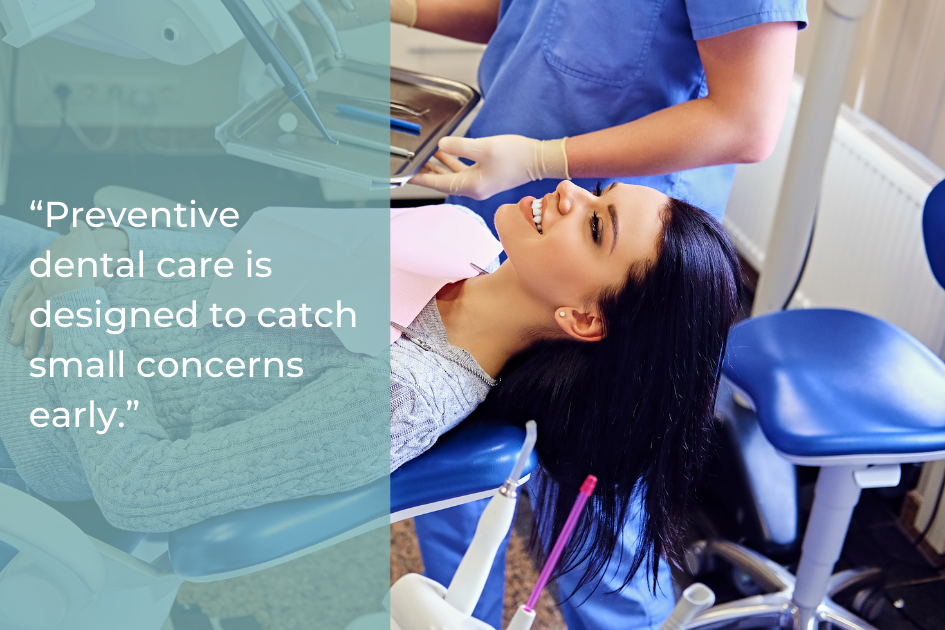
Professional Dental Cleaning
During a preventive dental visit, we focus on a professional cleaning that protects your oral health and helps us plan any needed treatment early. We use plaque removal techniques to clear biofilm from teeth and along the gumline, then address hardened deposits to reduce tartar buildup effects like inflammation and bleeding. Our tools used in cleaning may include ultrasonic scalers and hand instruments to lift debris safely. Next, we polish to smooth enamel, highlighting the benefits of polishing: fewer retention sites for plaque and a fresher feel. We’ll also review your ideal dental cleaning frequency based on risk.
Comprehensive Dental Exam
Next, we move into an extensive dental exam that gives us a clear, preventive snapshot of your oral health. We’ll perform thorough assessments of each tooth, checking for cavities, fractures, and wear patterns that can signal grinding or erosion. Then we’ll evaluate your gums for early signs of periodontal disease, measuring inflammation and spotting areas that need closer attention. Using chairside dental technology and careful visual inspection, we’ll document findings and explain what they mean through focused patient education. You’ll leave with practical oral hygiene guidance and, if needed, customized treatment plans to protect stability long term.
Digital Imaging and Preventive Screening
When we need a clearer look beneath the surface, we’ll use digital imaging and targeted preventive screening to catch concerns early and track changes over time. Depending on your risk and history, we may take X-rays to confirm what we can’t see clinically and document baseline findings. With preventive technology, we monitor changes over time and compare images visit to visit, supporting early detection and confident treatment planning. You can expect:
1. Quick, low-dose images showing tooth roots and bone
2. Screening for hidden decay, infection, or gum breakdown
3. Clear explanations of X-ray benefits and next steps
Signs You May Need to See the Dentist Sooner
How do we determine it’s time to come in sooner than our regular checkup? We watch for tooth sensitivity triggers like cold, sweets, or biting pain, which can signal decay or cracks. Bleeding or swollen gums are key gum disease indicators and deserve prompt evaluation. Ongoing odor points to bad breath causes such as infection, trapped debris, or dry mouth. If you’ve got rough edges or fractures, we’ll recommend chipped teeth remedies to protect the tooth and restore function. Changes in your bite, popping, or soreness call for jaw discomfort solutions before problems worsen.
Preventive Habits That Support Healthy Teeth Between Visits
Even though we may only see each other every six months, we can keep cavities and gum inflammation in check by sticking to a few consistent daily habits: reliable home care, smart dietary choices, and simple hydration tips.
1. Brush twice daily with fluoride toothpaste, and prioritize toothbrush maintenance by replacing your brush regularly.
2. Use flossing techniques once a day to disrupt plaque where brushes can’t reach.
3. Limit sugary foods and drinks, and drink water throughout the day to support saliva and rinse acids.
If we keep these routines steady, we’ll protect enamel and keep gums calmer between visits.

Common Preventive Care Questions
Strong daily habits do a lot of the heavy lifting between visits, but they can’t replace what we check for in a preventive appointment. If nothing hurts, skipping a cleaning can still let plaque harden and inflammation build. Many adults do benefit from twice-yearly exams, though needs vary; don’t rely on oral health myths. We detect trouble early with gum measurements, X-rays when needed, and careful visual checks, often before symptoms appear. These visits support cavity prevention strategies and reinforce dental hygiene tips. They also address gum disease facts and offer dental anxiety solutions, so you stay comfortable.
Personalized Preventive Care at Austin Dental Works
Because no two mouths and no two risk profiles are the same, we tailor preventive care at Austin Dental Works to your exam findings, health history, and goals. We focus on personalized care, then guide you with patient education so you understand what’s happening and why. We’ll also use comfort measures to keep visits calm and predictable. Your plan may include:
1. Customized hygiene intervals and home-care coaching
2. Targeted fluoride, sealants, or periodontal monitoring as tailored treatments
3. Risk-based X-rays and oral cancer screening as preventive strategies
We’ll reassess each visit, adjust early, and help you stay stable.
Conclusion
We have all heard the theory that a twice-yearly dental visit fits everyone, but evidence shows that risk matters more than the calendar. If we are prone to cavities, managing gum disease, using tobacco, or living with conditions such as diabetes, we may need closer monitoring. If our oral health remains stable, visits may be spaced out safely. Either way, preventive exams and cleanings help detect small changes before they become painful or complex problems, keeping care predictable and reassuring. The best approach is a schedule tailored to your individual needs. Speak with your dentist at Austin Dental Works in Austin, TX, about the preventive care plan that fits you best, and schedule your next checkup with our team today to keep your smile healthy and strong.