
Tooth loss affects millions of Americans, and for many people, dentures are the solution that gives them their smile, their confidence, and their quality of life back. If you have been putting off addressing missing teeth because you are unsure what the process involves, or because you have a mental image of dentures that belongs in another decade, this guide is for you. Modern dentures have come a long way, and Austin Dental Works is here to walk you through everything you need to know.
Why So Many People Are Choosing Dentures
Dentures have been around for a long time, but the reasons people choose them today are the same as they have always been: they work, they restore function, and they give people back something that tooth loss takes away. What has changed is how good they have gotten.
How Tooth Loss Affects More Than Just Your Smile
Most people think of tooth loss as a cosmetic problem, but the impact goes much deeper than appearance. When teeth are missing, chewing becomes difficult, and the range of foods you can comfortably eat shrinks. Speech can be affected, particularly with sounds that rely on your front teeth. Over time, the jawbone in areas where teeth are missing begins to deteriorate because it is no longer being stimulated. This bone loss can change the shape of your face, causing a sunken or aged appearance that has nothing to do with how old you actually are. Addressing tooth loss with dentures helps protect against these changes and restores both function and confidence.
Why Modern Dentures Are Nothing Like What You Remember
The word “dentures” still carries an outdated image for a lot of people, one involving ill-fitting plates, slipping at the dinner table, and an obvious artificial look. That image no longer reflects reality. Today’s dentures are crafted from high-quality materials designed to closely mimic the look and feel of natural teeth. They are custom-fitted to your mouth, which means better stability, more natural movement, and a result that most people around you will never be able to identify as anything other than a genuine smile. If you have been hesitant because of what you remember from older generations, it is worth taking a fresh look at what is actually available.
What Are Dentures and How Do They Work
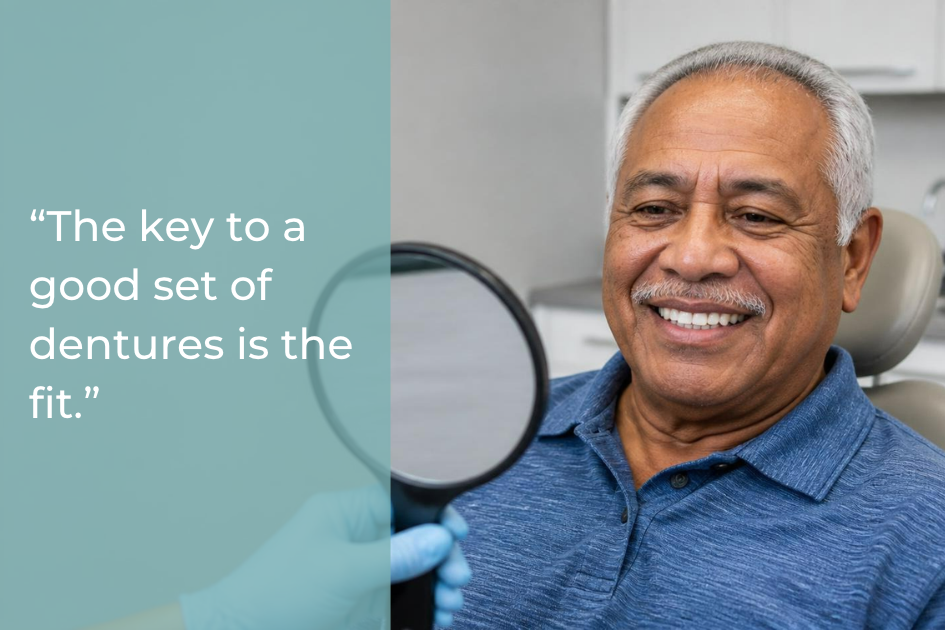
At their core, dentures are removable dental appliances that replace missing teeth and the gum tissue that surrounds them. They sit over your gums and are designed to restore the appearance and function of natural teeth. The key to a good set of dentures is the fit, which is why the process of getting them involves several careful steps rather than a one-size-fits-all approach.
How Dentures Replace Missing Teeth
Dentures work by sitting over the gum ridge and, in the case of partial dentures, anchoring to remaining natural teeth for added stability. Full dentures rely on the natural suction created between the denture base and the gums, along with the support of the surrounding muscle structure. Partial dentures use a combination of clasps and the support of existing teeth to stay in place. Both types restore the ability to chew, speak clearly, and maintain the facial structure that missing teeth would otherwise compromise.
How Dentures Are Made and Fitted
Getting dentures is a multi-step process that begins with detailed impressions of your mouth. These impressions are used to create a precise model of your gum ridges, which forms the foundation for your custom dentures. From there, measurements are taken to ensure proper alignment and bite. A wax model is typically created first so you can try the fit and appearance before the final denture is produced. This trial stage is your opportunity to give feedback and make sure everything looks and feels right before anything is finalized. The result is a set of dentures built specifically for your mouth, not a generic approximation of one.
Types of Dentures Available at Austin Dental Works
Not all dentures are the same, and the right type for you depends on how many teeth you are missing, the condition of your remaining teeth and gums, and your personal goals. At Austin Dental Works, Dr. Lindsey Jaros offers several options to meet a range of needs.
Full Dentures
Full dentures, also called complete dentures, replace an entire arch of teeth, either the upper row, the lower row, or both. They rest directly on the gum tissue and are the most comprehensive solution for patients who have lost all or nearly all of their natural teeth in a given arch. Full dentures are custom-crafted to match the natural contours of your mouth and can be designed to complement your facial features and give you a natural, balanced smile.
Partial Dentures
If you still have healthy natural teeth remaining, a partial denture is designed to fill in the gaps left by missing teeth while working alongside what you still have. Partial dentures consist of replacement teeth attached to a gum-colored base, which is connected by a metal or flexible framework that clips to your natural teeth for stability. They are a practical and effective way to restore your smile without replacing teeth that do not need replacing.
Immediate Dentures
Immediate dentures are placed on the same day that your remaining teeth are extracted, meaning you never have to go without teeth during the healing process. While this is a significant advantage for many patients, it is worth knowing that immediate dentures typically require more frequent adjustments in the weeks and months following placement. As your gums heal and change shape after extractions, the fit of the denture will need to be refined to keep it comfortable and secure. Your dental team will guide you through this process and schedule follow-up appointments as needed.
Implant-Supported Dentures
For patients who want the stability of a fixed restoration with the convenience of a removable one, implant-supported dentures offer the best of both worlds. These dentures are anchored to dental implants placed in the jawbone, which eliminates the movement and instability that can sometimes be a concern with traditional dentures. Implant-supported dentures also help preserve the jawbone by providing the stimulation that natural tooth roots would normally provide. If you are a candidate for dental implants, this option is worth discussing with Dr. Jaros during your consultation.
Who Is a Good Candidate for Dentures
Dentures are a versatile solution, but they are not the right fit for every situation. Understanding whether you are a good candidate starts with a thorough assessment of your oral health.
How Many Teeth Do You Need to Be Missing
There is no strict minimum number of missing teeth that qualifies someone for dentures. Partial dentures can be appropriate for patients missing just a few teeth in an arch, while full dentures are designed for those who have lost an entire arch. The more relevant question is whether the remaining teeth are healthy enough to be preserved and whether they can serve as effective anchors for a partial denture. Your dentist will evaluate the full picture before making a recommendation.
Health and Bone Density Considerations
Good candidates for dentures generally need to have healthy enough gum tissue to support the denture base comfortably. Sufficient bone density in the jaw is also a factor, particularly for implant-supported options. Patients with significant bone loss may require additional treatment before certain types of dentures can be placed. Overall health also plays a role, as conditions like uncontrolled diabetes can affect healing and gum tissue health. A thorough evaluation at Austin Dental Works will give you a clear picture of what your specific situation calls for.
When Dentures Are a Better Option Than Implants
Dental implants are often held up as the gold standard for tooth replacement, and in many cases they are an excellent choice. But they are not right for everyone. Patients with insufficient bone density may not be candidates for implants without additional bone grafting procedures. Those who want a faster path to a restored smile may prefer dentures, which can be delivered much more quickly than implants. Budget is also a real consideration for many patients. Dentures offer a highly effective and time-tested solution, and for the right patient, they are absolutely the best choice.
What to Expect During the Denture Process at Austin Dental Works
Understanding what the process looks like from start to finish can take a lot of the uncertainty out of getting dentures. Here is what you can generally expect when you work with the team at Austin Dental Works.
Your Initial Consultation and Assessment
Your first appointment is focused on getting a complete picture of your oral health and understanding your goals. Dr. Jaros will examine your gums, any remaining teeth, and the underlying bone structure. You will have the opportunity to discuss which type of denture makes the most sense for your situation, ask any questions you have, and get a clear outline of the steps ahead. This appointment sets the tone for the entire process and ensures that your treatment plan is built around your individual needs.
Impressions, Measurements, and Fitting Appointments
Once your treatment plan is established, the next stage involves taking precise impressions and measurements of your mouth. These are used to fabricate your custom dentures and to create the wax trial model that lets you preview the fit and appearance before anything is finalized. Your feedback during the fitting appointments matters, so do not hesitate to speak up about anything that feels off. Getting the fit right at this stage is what leads to a comfortable, confident final result.
The Adjustment Period and What Is Normal
It takes time to get used to wearing dentures, and that is completely normal. In the first few weeks, you may experience some soreness as your gums adapt, increased saliva production, and slight changes in how you speak. Most patients find that these things resolve fairly quickly as their mouth adjusts. Eating may also require some practice at first, and starting with softer foods before gradually reintroducing a wider variety is a good approach. If you notice significant discomfort or feel like something is not fitting right, contact your dental team. Minor adjustments are a normal part of the process and should always be addressed promptly rather than tolerated.
How to Care for Your Dentures
Proper care is what keeps your dentures looking good and lasting as long as possible. The good news is that a solid maintenance routine is straightforward and does not take much time.
Daily Cleaning Routine for Dentures
Dentures should be rinsed after every meal to remove food particles. Each day, brush them gently with a soft-bristled brush and a non-abrasive denture cleaner, never regular toothpaste, which can scratch the surface. Soaking them overnight in a denture-cleaning solution helps remove bacteria and keeps them fresh. Always handle your dentures over a folded towel or a sink filled with water so that if they slip, they have a soft landing. Even when your dentures are out, gently brushing your gums and tongue with a soft brush helps maintain the health of the tissue underneath.
Foods to Be Careful With
Modern dentures are durable, but certain foods are harder on them than others. Sticky foods like caramel and chewy candy can pull at your dentures and potentially dislodge them. Very hard foods like raw carrots, hard candy, and nuts can put excessive pressure on the denture base. Biting directly into very hard foods with your front teeth can also cause instability. As you get more comfortable with your dentures over time, you will naturally develop a sense of what works well and what to approach with more caution.
When to See Your Dentist for Adjustments
Your mouth changes over time, and dentures that fit perfectly when they were made may need adjustments as your gum tissue and bone structure shift. You should schedule an adjustment appointment if you notice your dentures feeling loose or moving when they should not be, if you develop sore spots that do not resolve within a few days, or if you notice any cracking or damage. Regular check-up appointments with Dr. Jaros are also important even when everything feels fine, as she can spot early signs of fit issues before they become uncomfortable problems.
Dentures vs Dental Implants: How to Know Which Is Right for You

Choosing between dentures and dental implants is a decision that depends on your health, your timeline, your goals, and your personal preferences. Implants offer a permanent, fixed solution that functions very similarly to natural teeth and preserves bone density over the long term. Dentures offer a faster, non-surgical path to a restored smile and can be an excellent long-term solution in their own right. For some patients, implant-supported dentures combine the benefits of both. The most important thing is to have an honest conversation with Dr. Jaros about what matters most to you and what your oral health makes possible, so that the recommendation you receive is truly tailored to your situation.
Common Questions Patients Ask About Dentures
Will Dentures Look Natural
Yes, when properly crafted and fitted, modern dentures look remarkably natural. The materials used today closely mimic the translucency and color variation of real teeth, and the base is designed to match your gum tissue. Because your dentures are custom-made to fit your mouth and complement your facial features, the result is far more personalized and natural-looking than most people expect going in.
Will Dentures Affect How I Speak or Eat
There is typically a short adjustment period during which speaking and eating feel different. Some patients notice they need to practice certain sounds, and chewing will feel different at first. Most people adapt within a few weeks and return to speaking and eating comfortably. Starting with softer foods and gradually expanding from there is the most practical approach during the adjustment period.
How Long Do Dentures Last
With proper care, dentures typically last between five and ten years before they need to be replaced or significantly relined. Over time, changes in your jawbone and gum tissue affect the fit, which is why regular dental visits remain important even after you have been wearing dentures for years. Well-maintained dentures that receive timely adjustments will serve you much better and much longer than ones that are neglected.
Why Choose Austin Dental Works for Dentures in Austin, TX
At Austin Dental Works, Dr. Lindsey Jaros and her team bring a patient-first approach to every step of the denture process. From your initial consultation through your fitting appointments and beyond, you will receive personalized care designed around your specific needs, your timeline, and your goals for your smile. The team at Austin Dental Works uses quality materials and takes the time to get the fit right, because they understand that a well-fitted denture is not just about appearance. It is about how you feel every single day.
A Smile You Are Proud Of Is Within Reach
Tooth loss does not have to be the end of the story. Whether you are missing a few teeth or a full arch, there is a denture solution designed to restore your smile, your confidence, and your quality of life. The team at Austin Dental Works is ready to help you understand your options, answer every question you have, and guide you through a process that is more comfortable and more rewarding than you might expect. Your best smile is still ahead of you.